Choosing the right rollator isn’t just about picking something with wheels and a seat — it’s about finding the one that actually feels safe, comfortable, and easy to live with every day.
For many seniors, the “wrong” rollator winds up being either too heavy, too tall, too flimsy, or just uncomfortable to use. The right one, on the other hand, can improve confidence, reduce fatigue, and make walking feel easier and more secure — whether that’s at home, outdoors, or while running errands.
So if you’re shopping for a rollator for yourself or a loved one, here are the top features that matter most — and why they make a difference in real-world daily use.
If you’re still trying to narrow down which style or size fits your situation, you may also want to check out this helpful guide after reading:
How Do I Choose the Right Rollator for the Elderly?
It breaks the decision down step-by-step based on height, mobility needs, and comfort.
1) Lightweight Frame That’s Easy to Lift and Maneuver
Weight is usually the first thing seniors notice — especially when you’re lifting a rollator into a car, up a few steps, or trying to maneuver it through tight spaces at home.
A good senior-friendly rollator should feel solid without being bulky, fold up easily, be simple to carry, and roll smoothly without needing a lot of effort.
Reducing mobility aid weight can help improve walking efficiency and confidence in older adults — especially for those with reduced strength or balance.
If portability matters to you — especially for travel or frequent loading into cars — you may want to explore this guide next:
Best Ultra Lightweight Foldable Rollators for Easy Travel
Lightweight models are often worth it for seniors who don’t want to struggle with lifting.
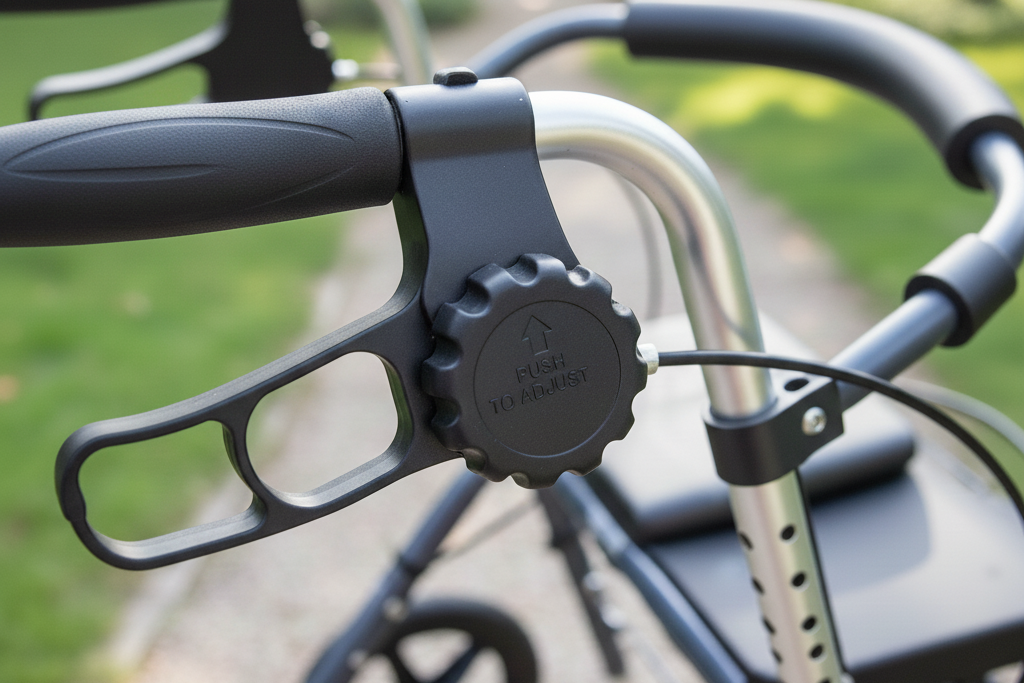
2) Adjustable Handle Height for Proper Posture
Handle height affects:
- posture
- back and neck strain
- balance
- overall comfort while walking
Handles that are too low cause slouching, while handles that are too high can affect stability.
The ideal setup allows the user to:
✔ stand upright
✔ bend elbows slightly
✔ keep shoulders relaxed
That’s why we always recommend choosing a rollator with height-adjustable handles instead of a fixed-height design — especially for taller individuals.
If you or your loved one is on the tall side, this resource may also be useful:
Best Rollators for 6-Foot Tall Persons
Getting the right height makes a bigger difference than most people realize.
3) Comfortable, Supportive Seat for Rest Breaks
One of the biggest advantages of a rollator (compared to a walker) is the ability to sit down safely when needed.
For seniors dealing with:
- fatigue
- back pain
- poor stamina
- circulation issues
having a comfortable built-in seat can make outings more manageable.
A good rollator seat should be:
✔ firm enough to feel stable
✔ wide enough to sit comfortably
✔ paired with a supportive backrest
✔ positioned at a height that makes standing easy
If you’re choosing a rollator specifically to support heavier users — you may want to review this dedicated guide for stronger frame models:
Heavy-Duty Walker with Seat and Wheels: The Ultimate Guide for Maximum Support
Heavier-capacity rollators often include wider, more supportive seating.
4) Large, Smooth-Rolling Wheels for Indoor & Outdoor Use
Wheel size makes a real difference in how the rollator handles:
Smaller wheels = better for flat indoor floors
Larger wheels = smoother outdoors, sidewalks, and uneven ground
For seniors who walk outside frequently, 8″–10″ wheels provide a more stable, comfortable experience and reduce vibration and jolting.
Good wheels help with:
✔ smoother turning
✔ less wrist and arm strain
✔ better control on uneven surfaces
If you or your loved one plans to travel with a rollator — especially through airports or hotels — larger wheels paired with a lighter frame can be a great combination:
Can I Take My Rollator on a Plane?
That guide explains TSA rules, gate-checking, and travel-friendly features.
5) Easy-to-Use Brakes That Feel Secure
Reliable hand brakes are essential for:
- stopping safely
- parking the rollator when seated
- maintaining control on slopes
The best brakes for seniors:
✔ engage smoothly
✔ don’t require excessive hand strength
✔ lock securely when seated
Many seniors prefer loop-style brakes because they feel natural to operate and easy to hold.
If hands are weak or arthritic, brake comfort becomes even more important. Trying the rollator (or carefully checking user reviews) can help ensure the braking feel matches the user’s needs.
6) Strong, Stable Frame with the Right Weight Capacity
A supportive rollator frame should feel:
✔ stable
✔ solid under pressure
✔ not wobbly when seated
Most standard rollators support around 250–300 lbs, but seniors who need more stability may benefit from a reinforced or heavy-duty frame.
If weight capacity is an important factor, here’s a guide that focuses on stronger models within the 350–450 lb range:
Heavy-Duty Walker with Seat and Wheels (350–450 lb Support)
And for those who need even more support, we also created:
Best Extra Heavy-Duty Rollators Above 500 lb
Choosing the right category ensures both comfort and safety long-term.
7) Foldable Design for Storage & Transport
A senior-friendly rollator should fold easily — ideally without needing tools or complicated steps.
Folding matters most if:
- it needs to be lifted into a car
- storage space is limited
- the user travels often
- caregivers assist with transport
Good foldable rollators:
✔ collapse compactly
✔ stay secure when folded
✔ are easy to reopen
This feature tends to matter even more for frequent travelers or family outings — where quick folding and unfolding makes life a lot easier.
Final Thoughts
The “best” rollator for a senior isn’t always the most expensive one — it’s the one that fits:
✔ their height
✔ their weight capacity needs
✔ their mobility level
✔ their daily routines
✔ where they walk most often
A well-matched rollator should feel:
- comfortable
- secure
- easy to control
- supportive without being bulky
If you’re still comparing options, a great next step is reading:
How Do I Choose the Right Rollator for the Elderly?
It helps match rollator features to real-life daily needs — simply and clearly.
FAQs
1) What is the most important feature in a rollator for seniors?
Proper height adjustment and stability — they affect posture, comfort, and safety.
2) Is a lightweight rollator better for older adults?
Yes, especially for lifting into cars and maneuvering indoors or while traveling.
3) Do seniors really need a rollator with a seat?
Yes — a seat allows safe rest breaks, especially for fatigue or back pain.
4) What wheel size is best for seniors who walk outdoors?
8″–10″ wheels provide better stability and smoother outdoor movement.
5) When should someone choose a heavy-duty rollator?
If they need extra support, wider seating, or higher weight capacity.
*Disclaimer: This website provides automotive content for informational purposes only and should not be considered professional advice. While we strive for accuracy, we do not guarantee the reliability or suitability of any vehicle or product mentioned—always conduct your own research before making purchasing decisions. Additionally, some links on this site are affiliate links, meaning we may earn a commission if you make a purchase, at no extra cost to you.