
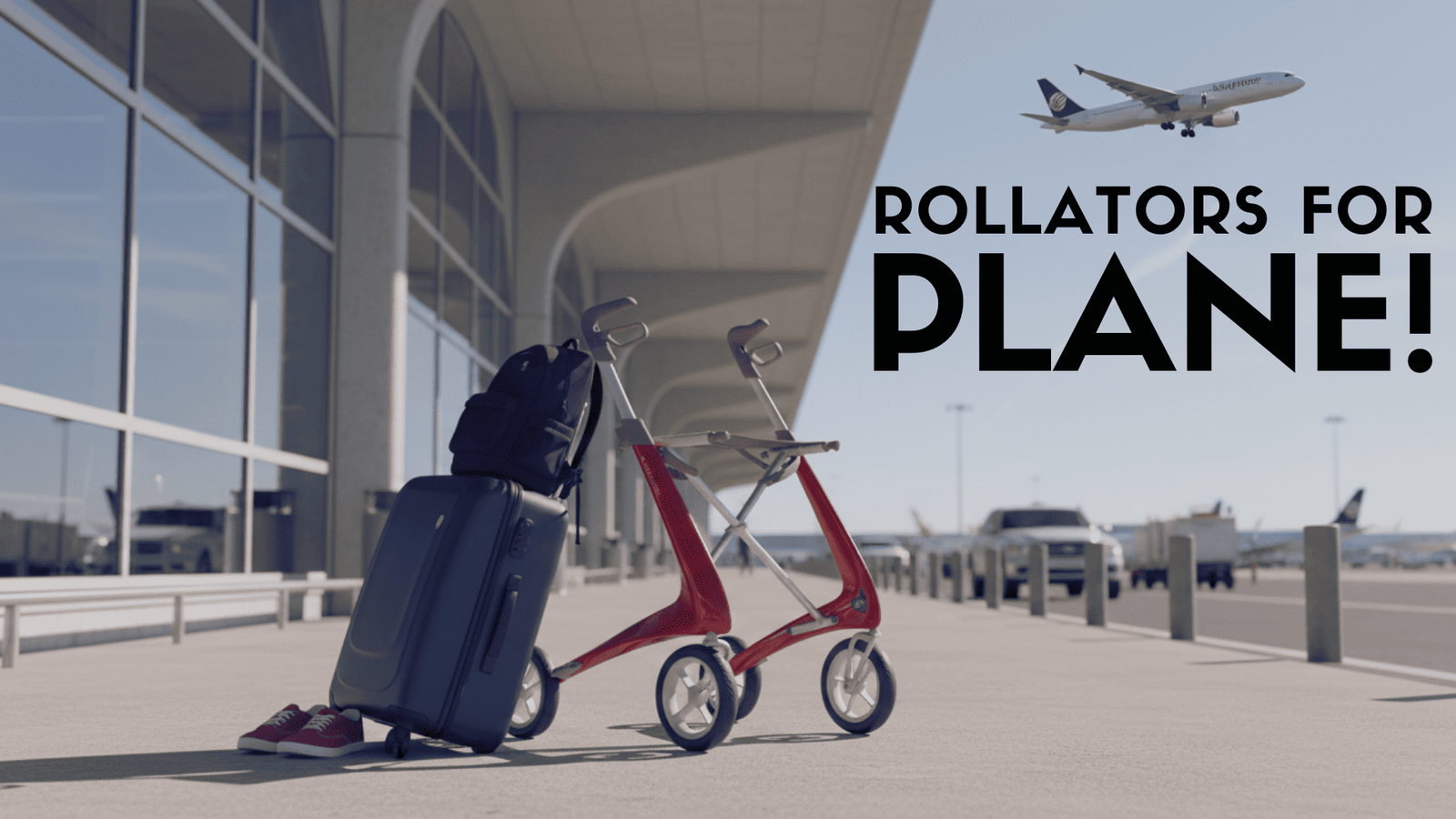
If you’ve ever thought about bringing your rollator on a flight you’re not the only one. The good news is yes you can take your rollator on a plane but there are some handy tips to keep in mind to make the whole experience easier. No matter if you’re traveling with a lightweight rollator or a bigger outdoor one knowing the airline rules getting your stuff ready and picking the right rollator can really help you out.
Rollators and Air Travel
Mobility aids like rollators play a critical role for older adults or anyone dealing with walking difficulties. A study found that nearly 10% of U.S. adults over age 65 regularly use walkers which could also include rollators.
When you’re navigating airports, terminals, aisles and overhead bins, you don’t want surprises. Familiarizing yourself with what rollators are allowed, how to prepare them, and how they perform in transit can give you freedom instead of hassle.
What Airlines Say About Rollators
Most major airlines treat rollators as mobility aids, not standard luggage. That means they typically don’t count toward your carry-on allowance or incur extra fees.
For example, many carriers will allow you to use your rollator up to the boarding gate. After that, it’s either stowed in the aircraft cabin if space allows—or gate-checked like a wheelchair and returned to you upon arrival.
Despite the general rule, each airline has its own policy—so always check your specific carrier’s rules ahead of time.
Here are a few things to ask when calling or reading policy docs:
- “Can I use the rollator in the airport up to the gate?”
- “Will you gate-check my rollator and return it to me at the plane door or baggage claim?”
- “Does my rollator need specific labeling or packaging for transit?”
Pre-Flight Rollator Checklist
Here’s a quick checklist to make sure your travel goes smoothly:
- Fold the rollator, if foldable, for easier handling and storage.
- Label the rollator with your name and contact info—especially important if it goes into cargo.
- Remove detachable accessories (bags, baskets) to reduce risk of damage or loss.
- Notify your airline in advance: traveling with a rollator + any accessibility needs.
- Bring a backup mobility aid or alternative support plan in case your rollator is delayed.
- At security checkpoint: the rollator may go through X-ray or hand inspection. You can request a wheelchair escort or manual screening if needed.
What Makes a Rollator Travel-Friendly?
When traveling, you’ll want a rollator that’s optimized for movement, folding, and adaptability. A great travel rollator is:
- Lightweight (under ~17 lbs is ideal)
- Folds compactly and easily
- Has smooth brakes and good wheels for terminals and sidewalks
- Comfortable to maneuver through crowds
- Reliable in transit (no unstable parts)
A top example is the byACRE Carbon Ultralight Rollator, which weighs only 10.6 lbs (4.8 kg) and folds down with ease—perfect for flying.

If you’re comparing standard rollators with ultra-light travel models, our guide on how to choose the right rollator is a great reference:
→ How Do I Choose the Right Rollator for the Elderly?
Travel Rollator vs. Standard Rollator: A Quick Comparison
| Feature | Travel-Focused Rollator | Standard Rollator |
|---|---|---|
| Weight | Very light (≈10–17 lbs) | Heavier (20 lbs+) |
| Folded Size | Compact, easy to load | Bulkier, less compact |
| Wheel Size | Medium—optimized for indoors/terminals | Larger wheels—better for outdoor terrain |
| Best Use Case | Travel, airports, indoor use | Daily outdoor use, uneven terrain |
| Travel Suitability | Excellent—fits in car trunks/overheads | Moderate—needs more planning |
In short: if you’re flying or traveling often, a rollator optimized for travel will reduce stress and increase mobility. If your walks are mostly local, a standard rollator might serve you better.
Top Travel Rollator: byACRE Carbon Ultralight
Let’s explore the byACRE model in deeper detail:
Specs & Features
- Weight: ~10.6 lbs (4.8 kg).
- Handle Height (Regular Track): ~31.5″ to ~37.5″ (80–95 cm).
- Seat Width: 16.5″ (42 cm) / Wide Track: 18.5″ (47 cm).
- Folds down to ~9.8″ depth (26 cm).
- Premium carbon-fibre and aircraft-grade aluminum frame.
Why It’s Ideal for Air Travel
- Extremely lightweight—easy to lift into overhead bin or car trunk.
- Compact fold—fits tight spaces.
- Smooth weight and premium build reduce fatigue when traveling.
- Folded size makes gate-check or cabin stow more convenient.
Pros
✔ Ultra-light weight—makes travel far easier
✔ Compact when folded—fits in tight spaces
✔ Premium build—great for daily use too
✔ Adjustable height—fits a range of user heights
Cons
✘ Premium price—higher cost than standard models
✘ Smaller wheels—may not be ideal for rough outdoor terrain
✘ Max weight ~285 lbs (130 kg) (for some versions) which might not suit heavier users.
What Users Say
Many reviewers highlight how easy it is to lift and fold. One comment: “I love how light this is and how easily it fits in my car trunk.” Others mention it’s ideal for travel, especially if you fly or take public transport often.
Real-World Travel Scenarios & Tips
Here’s how real users apply rollators in travel settings:
- Airport Navigation: Use your rollator from check-in through the gate. Once at the gate, inform staff and it’s either stowed in cabin or gate-checked.
- Car Trips: A lightweight foldable rollator easily fits in the trunk. Stop frequently and use the rollator’s seat feature for rest.
- Train/Bus: These rollators fold compactly and fit designated storage areas. Larger-wheel models may struggle in tighter transit spaces.
Final Thoughts
So, yes—you can absolutely take your rollator on a plane. However, the key here is choosing one that fits your travel lifestyle and prepping properly.
If you fly often or move around a lot, consider a travel-optimized rollator like the byACRE Carbon Ultralight. If you’re primarily walking in your local neighborhood or over uneven terrain, a larger-wheel, standard rollator might serve better.
For more information and to compare specifications, check out:
- How Do I Choose the Right Rollator for the Elderly?
- Best Ultra Lightweight Foldable Rollators for Easy Travel
No matter your choice—traveling with your rollator can keep you mobile, independent, and confident. Pack smart, fly smoothly, and walk easily.
Safe travels and happy rolling!
*Disclaimer: This website provides automotive content for informational purposes only and should not be considered professional advice. While we strive for accuracy, we do not guarantee the reliability or suitability of any vehicle or product mentioned—always conduct your own research before making purchasing decisions. Additionally, some links on this site are affiliate links, meaning we may earn a commission if you make a purchase, at no extra cost to you.
If you’ve ever thought about bringing your rollator on a flight you’re not the only one. The good news is yes you can take your rollator on a plane but there are some handy tips to keep in mind to make the whole experience easier. No matter if you’re traveling with a lightweight rollator or a bigger outdoor one knowing the airline rules getting your stuff ready and picking the right rollator can really help you out.
Rollators and Air Travel
Mobility aids like rollators play a critical role for older adults or anyone dealing with walking difficulties. A study found that nearly 10% of U.S. adults over age 65 regularly use walkers which could also include rollators.
When you’re navigating airports, terminals, aisles and overhead bins, you don’t want surprises. Familiarizing yourself with what rollators are allowed, how to prepare them, and how they perform in transit can give you freedom instead of hassle.
What Airlines Say About Rollators
Most major airlines treat rollators as mobility aids, not standard luggage. That means they typically don’t count toward your carry-on allowance or incur extra fees.
For example, many carriers will allow you to use your rollator up to the boarding gate. After that, it’s either stowed in the aircraft cabin if space allows—or gate-checked like a wheelchair and returned to you upon arrival.
Despite the general rule, each airline has its own policy—so always check your specific carrier’s rules ahead of time.
Here are a few things to ask when calling or reading policy docs:
- “Can I use the rollator in the airport up to the gate?”
- “Will you gate-check my rollator and return it to me at the plane door or baggage claim?”
- “Does my rollator need specific labeling or packaging for transit?”
Pre-Flight Rollator Checklist
Here’s a quick checklist to make sure your travel goes smoothly:
- Fold the rollator, if foldable, for easier handling and storage.
- Label the rollator with your name and contact info—especially important if it goes into cargo.
- Remove detachable accessories (bags, baskets) to reduce risk of damage or loss.
- Notify your airline in advance: traveling with a rollator + any accessibility needs.
- Bring a backup mobility aid or alternative support plan in case your rollator is delayed.
- At security checkpoint: the rollator may go through X-ray or hand inspection. You can request a wheelchair escort or manual screening if needed.
What Makes a Rollator Travel-Friendly?
When traveling, you’ll want a rollator that’s optimized for movement, folding, and adaptability. A great travel rollator is:
- Lightweight (under ~17 lbs is ideal)
- Folds compactly and easily
- Has smooth brakes and good wheels for terminals and sidewalks
- Comfortable to maneuver through crowds
- Reliable in transit (no unstable parts)
A top example is the byACRE Carbon Ultralight Rollator, which weighs only 10.6 lbs (4.8 kg) and folds down with ease—perfect for flying.
If you’re comparing standard rollators with ultra-light travel models, our guide on how to choose the right rollator is a great reference:
→ How Do I Choose the Right Rollator for the Elderly?
Travel Rollator vs. Standard Rollator: A Quick Comparison
| Feature | Travel-Focused Rollator | Standard Rollator |
|---|---|---|
| Weight | Very light (≈10–17 lbs) | Heavier (20 lbs+) |
| Folded Size | Compact, easy to load | Bulkier, less compact |
| Wheel Size | Medium—optimized for indoors/terminals | Larger wheels—better for outdoor terrain |
| Best Use Case | Travel, airports, indoor use | Daily outdoor use, uneven terrain |
| Travel Suitability | Excellent—fits in car trunks/overheads | Moderate—needs more planning |
In short: if you’re flying or traveling often, a rollator optimized for travel will reduce stress and increase mobility. If your walks are mostly local, a standard rollator might serve you better.
Top Travel Rollator: byACRE Carbon Ultralight
Let’s explore the byACRE model in deeper detail:
Specs & Features
- Weight: ~10.6 lbs (4.8 kg).
- Handle Height (Regular Track): ~31.5″ to ~37.5″ (80–95 cm).
- Seat Width: 16.5″ (42 cm) / Wide Track: 18.5″ (47 cm).
- Folds down to ~9.8″ depth (26 cm).
- Premium carbon-fibre and aircraft-grade aluminum frame.
Why It’s Ideal for Air Travel
- Extremely lightweight—easy to lift into overhead bin or car trunk.
- Compact fold—fits tight spaces.
- Smooth weight and premium build reduce fatigue when traveling.
- Folded size makes gate-check or cabin stow more convenient.
Pros
✔ Ultra-light weight—makes travel far easier
✔ Compact when folded—fits in tight spaces
✔ Premium build—great for daily use too
✔ Adjustable height—fits a range of user heights
Cons
✘ Premium price—higher cost than standard models
✘ Smaller wheels—may not be ideal for rough outdoor terrain
✘ Max weight ~285 lbs (130 kg) (for some versions) which might not suit heavier users.
What Users Say
Many reviewers highlight how easy it is to lift and fold. One comment: “I love how light this is and how easily it fits in my car trunk.” Others mention it’s ideal for travel, especially if you fly or take public transport often.
Real-World Travel Scenarios & Tips
Here’s how real users apply rollators in travel settings:
- Airport Navigation: Use your rollator from check-in through the gate. Once at the gate, inform staff and it’s either stowed in cabin or gate-checked.
- Car Trips: A lightweight foldable rollator easily fits in the trunk. Stop frequently and use the rollator’s seat feature for rest.
- Train/Bus: These rollators fold compactly and fit designated storage areas. Larger-wheel models may struggle in tighter transit spaces.
Final Thoughts
So, yes—you can absolutely take your rollator on a plane. However, the key here is choosing one that fits your travel lifestyle and prepping properly.
If you fly often or move around a lot, consider a travel-optimized rollator like the byACRE Carbon Ultralight. If you’re primarily walking in your local neighborhood or over uneven terrain, a larger-wheel, standard rollator might serve better.
For more information and to compare specifications, check out:
- How Do I Choose the Right Rollator for the Elderly?
- Best Ultra Lightweight Foldable Rollators for Easy Travel
No matter your choice—traveling with your rollator can keep you mobile, independent, and confident. Pack smart, fly smoothly, and walk easily.
Safe travels and happy rolling!
*Disclaimer: This website provides automotive content for informational purposes only and should not be considered professional advice. While we strive for accuracy, we do not guarantee the reliability or suitability of any vehicle or product mentioned—always conduct your own research before making purchasing decisions. Additionally, some links on this site are affiliate links, meaning we may earn a commission if you make a purchase, at no extra cost to you.